A good personal trainer comes down to seven things: a recognised qualification, experience that matches your goal, an assessment before any programme, real follow-up, a format that fits your life, clear pricing and a good personal connection. I’m Adam Saliaj, an independent personal trainer in Geneva and the Pays de Gex. Here is how to check each point, with me as much as with anyone else.
What qualifications should a personal trainer have?
Training backgrounds vary a great deal from one coach to the next, so it is perfectly reasonable to ask. A good coach will not mind.
1. A recognised qualification
Ask which qualification the person holds and what it covers: anatomy, physiology, programme design, adapting sessions for a beginner or for someone returning after a long break. A well-trained coach can explain why they are giving you an exercise, not just how to do it.
For my part, I hold a Licence STAPS, the French university degree in sport science.
2. Experience that matches your goal
Years in the job matter, but what matters more is whether they were spent on goals like yours. Losing weight, getting back into exercise after years away and building muscle each call for a different kind of support. Ask the coach which goals they work with most often.
I have been coaching for 11 years, with five specialities: physical transformation, getting back in shape, weight loss, muscle gain, and health and well-being. I am also a former athlete and bodybuilding competitor. You can read more on my about page.
How can you tell whether the coaching will really be personalised?
3. An assessment before any programme
Serious coaching starts with questions: your goal, your exercise history, any aches or injuries, your schedule, your sleep, how you eat. Without that conversation, a coach can only hand you a generic plan.
That is why the first step with me is a free phone assessment, then a free first trial session, with no commitment. We look at where you are now, you try a session, and you decide afterwards in your own time.
4. Real follow-up between sessions
Your sessions only add up to a few hours of your week. What happens in between (food, sleep, everyday movement) weighs heavily on the result. Ask how the coach tracks your progress, how often the programme is adjusted and how you can get a question answered.
In my online coaching, that follow-up is built in: an app that brings together training, nutrition and supplementation guidance, a weekly check-in (questionnaire, photos, weight) with a phone call, and I’m available on WhatsApp 7 days a week.
Does the coaching fit around your life?
5. A location and format that work for you
The best programme is the one you can stick to. If the journey puts you off or the times never quite work, you will end up cancelling.
I offer three formats:
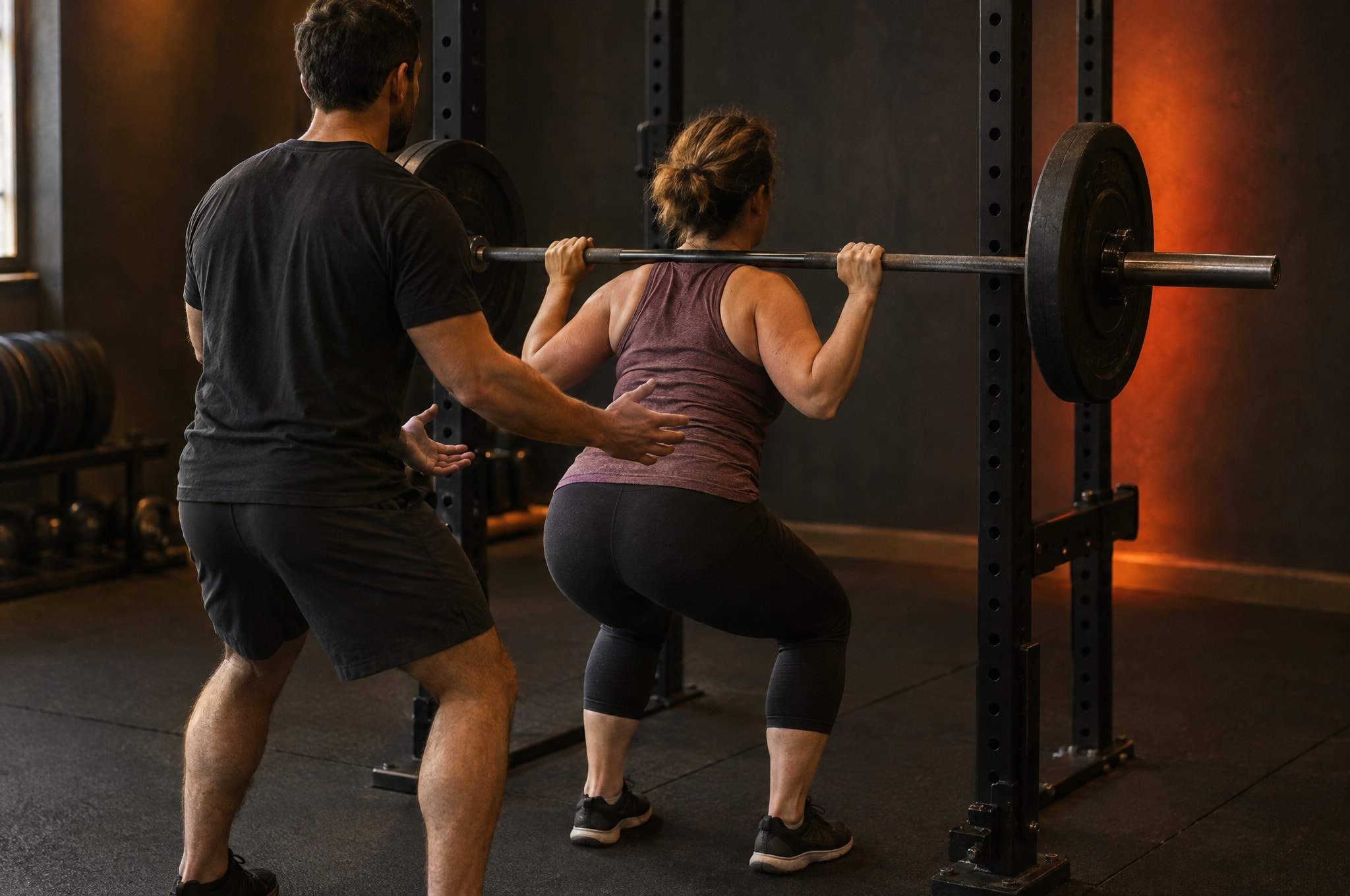
- In the gym, at RJ Training, L’Ancienne-Route 77A, 1218 Le Grand-Saconnex. You do not need a membership to train with me at the gym.
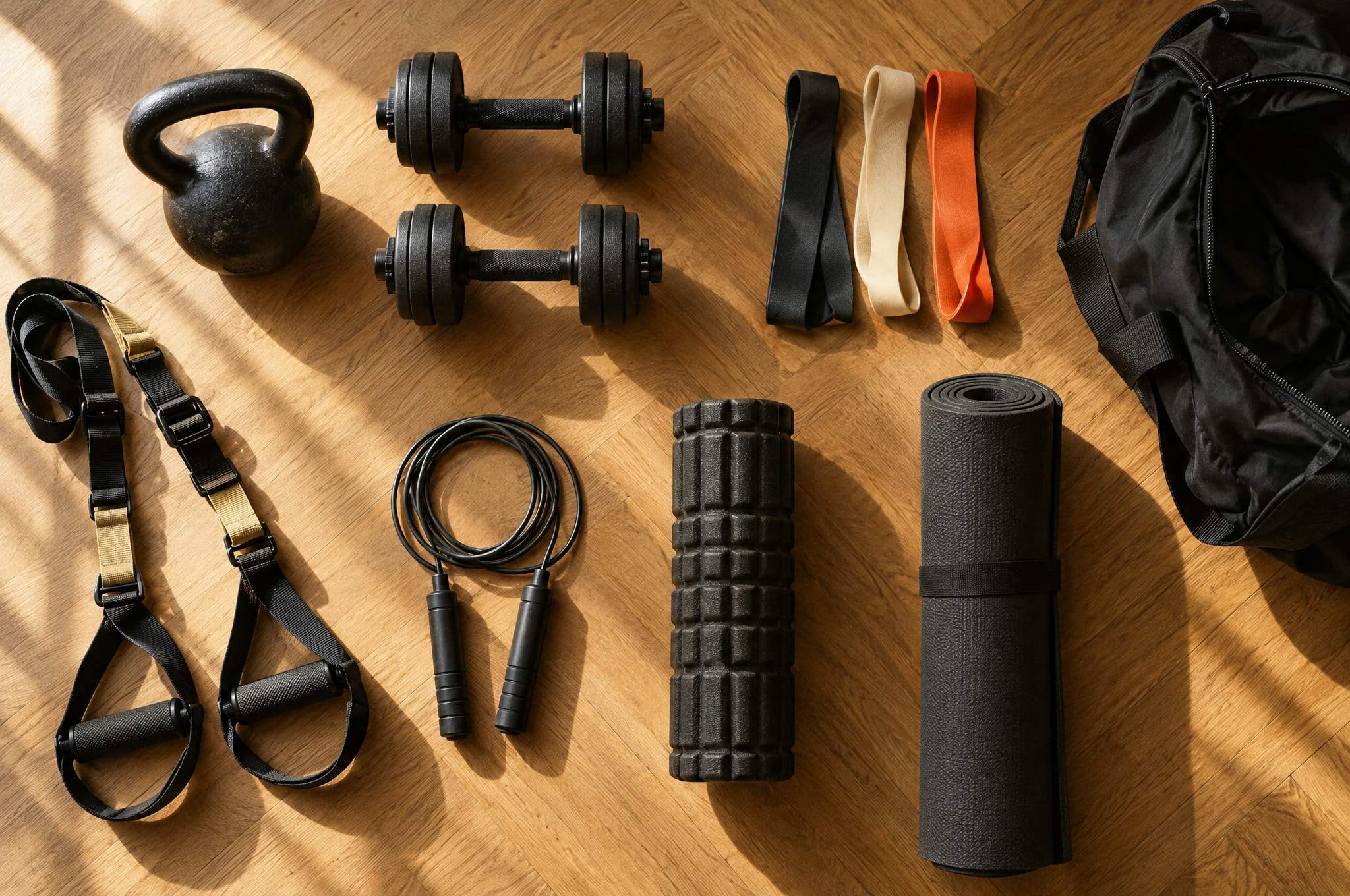
- At home, in Geneva and the Pays de Gex on the French side, for example Ferney-Voltaire, Gex, Divonne-les-Bains or Saint-Genis-Pouilly. For home personal training, in Geneva as well as in the Pays de Gex, I bring all the equipment and there is no travel fee.
- Online, if you would rather train on your own with remote support.
Sessions are in English or French, one-to-one or as a duo.
6. Clear pricing from the start
Before you begin, you should know what you are paying, how long a session lasts and what is included. Ask how payment works too, and whether there are any extras.
With me, a one-hour session costs CHF 100 and a pack of 12 sessions costs CHF 1000. Online coaching starts at €99 per month, and your first trial session is free. Payment is by cash or bank transfer. The details are on the pricing page.
And what about rapport?
7. Feeling at ease with the person
You will spend a fair amount of time with your coach, sometimes on days when you doubt yourself. You need to be able to say “I can’t do this” or “it hurts here” without worrying about being judged.
During your first conversation, look for a few simple signs. Does the person actually listen? Do they repeat your goal back to you in your own words? Do they speak plainly, without jargon or miracle promises? If you hang up wanting to get started, that is a good sign.
Which questions should you ask a personal trainer before committing?
Keep this list to hand for your first call:
- What is your qualification, and how long have you been coaching?
- How does the initial assessment work?
- Where do sessions take place, and how long do they last?
- What does it cost, and what is included?
- How do you track my progress between sessions?
A serious coach will answer all of these gladly.
In short
Qualification, experience, assessment, follow-up, format, pricing, rapport: when all seven are in place, there is a good chance you have found the right person. Take the time to compare, and choose someone you can see yourself making progress with over the long run.
To find out whether we would work well together, book your free trial session: it costs nothing and commits you to nothing.
This article gives general information. It is not a substitute for advice from a healthcare professional.