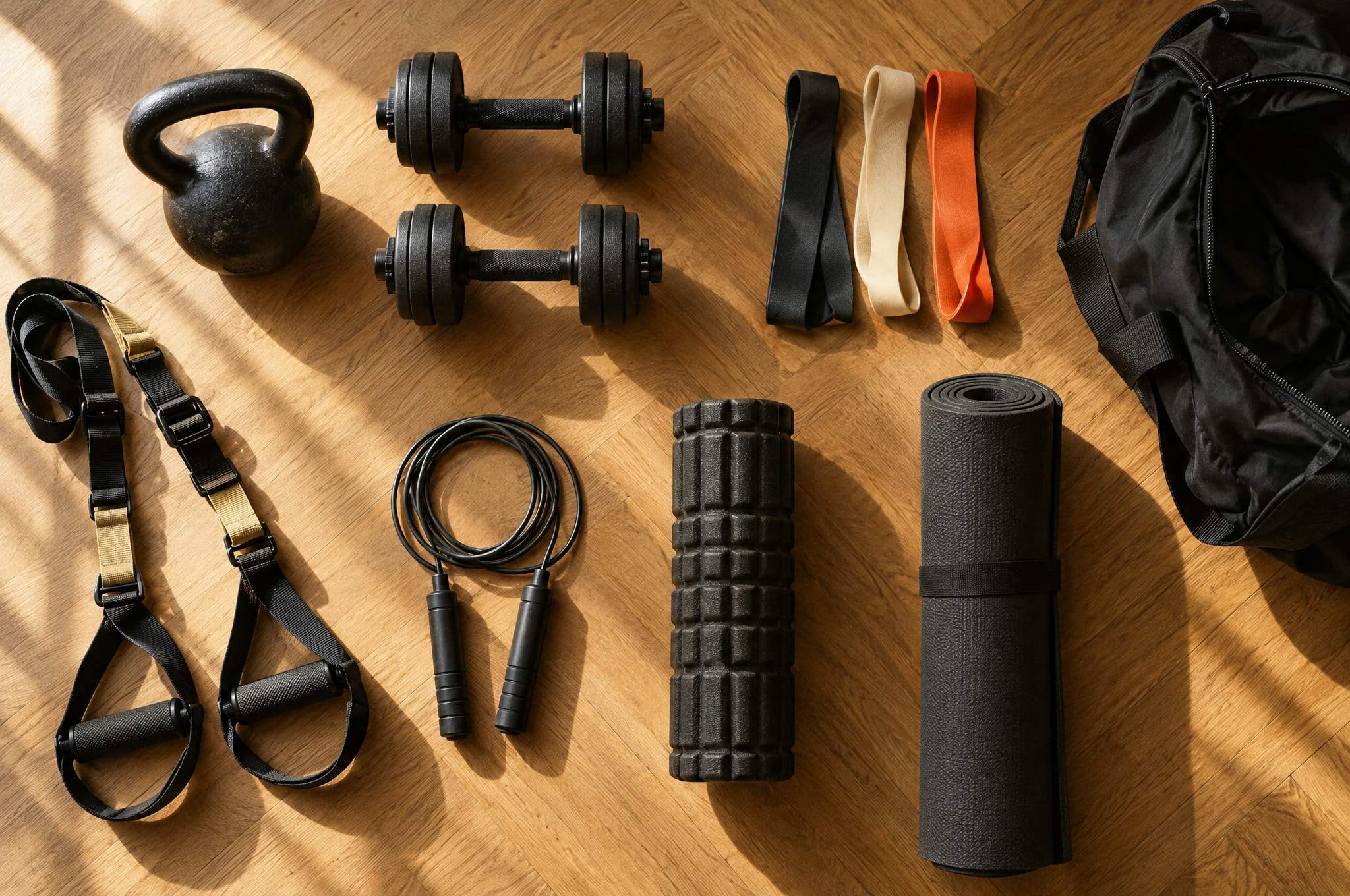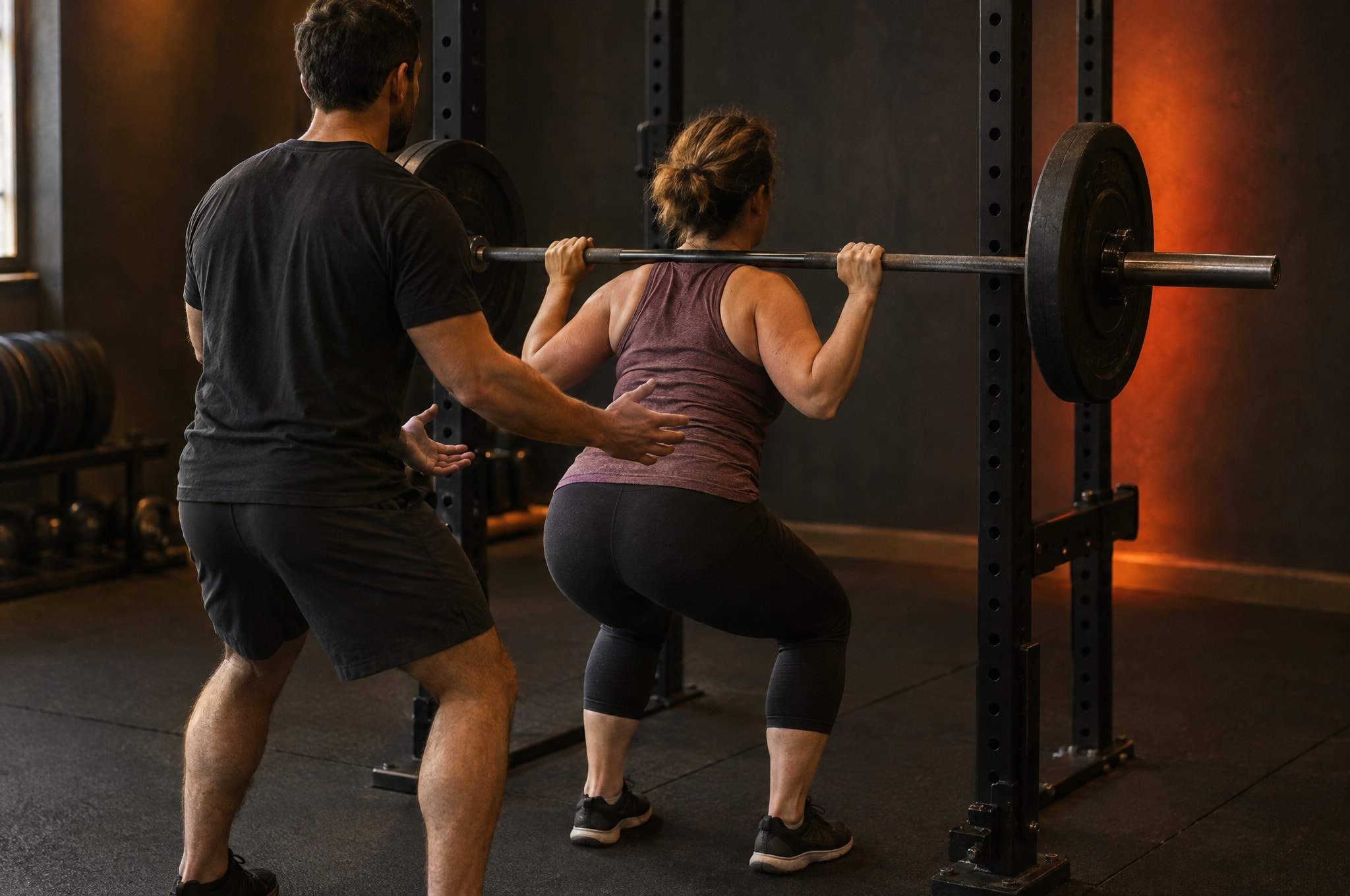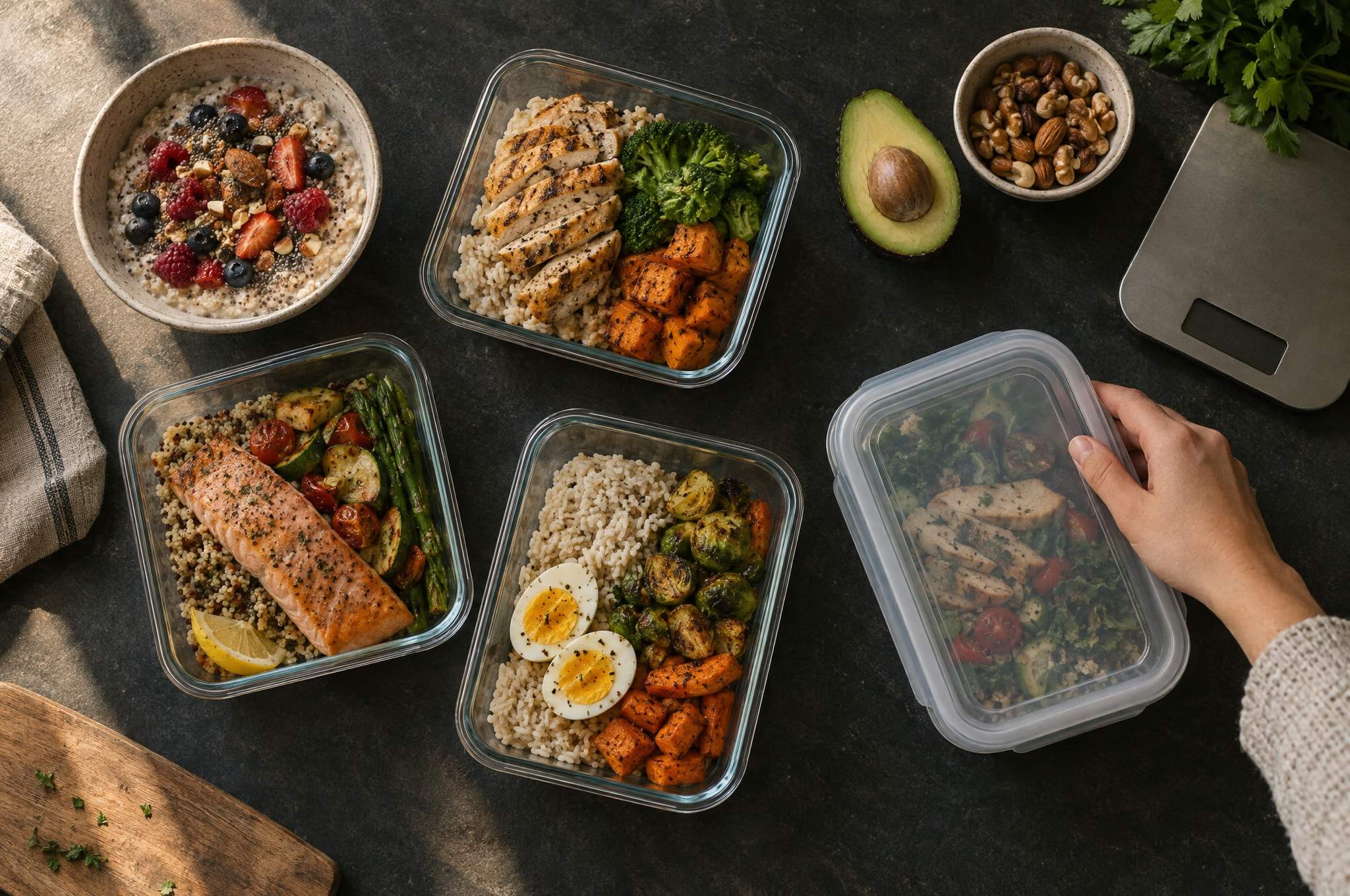
For lasting weight loss, strength training matters as much as cardio. Fat loss depends on an energy deficit sustained over time, and resistance training helps you hold on to muscle while you are in it. The most effective approach is not to pick one, but to combine both with eating habits that support them.
Strength training or cardio: which one actually makes you lose weight?
Neither, on its own. To lose fat, your body needs to use slightly more energy than it takes in, and to keep doing so over time. That is what an energy deficit means.
Cardio and strength training both increase what you use. Your diet affects what comes in. Exercise alone is rarely enough if your eating does not follow. So the useful question is not which one to choose, but what each one gives you.
Why does strength training matter so much when you are losing weight?
When you lose weight, you do not necessarily lose only fat: some of it can be muscle. And muscle is what lets you carry the shopping, climb the stairs and feel solid in everyday life.
Strength training sends your body a simple message: this muscle is being used, so keep it. That is why it helps preserve muscle mass during weight loss. Two habits work in the same direction:
- eating enough protein;
- getting enough sleep.
The aim is not just to weigh less, but to feel stronger and fitter along the way.
Where does cardio fit in?
It has a real place. Aerobic activity is good for your heart and lungs, and it adds to the energy you use.
The World Health Organization (WHO) recommends that adults do 150 to 300 minutes of moderate-intensity aerobic activity a week, plus muscle-strengthening activities on 2 or more days a week. In other words, the official guidance already includes both.
And cardio does not have to mean running. Brisk walking, cycling and swimming all count. Pick something you enjoy and you will keep it up for longer.
How do you start strength training if you have never done it?
Simply, and without comparing yourself to anyone else.
- Start with a few basic movements: squatting, pushing, pulling, carrying. These are the movements of everyday life.
- Learn the technique before adding weight. A light load you control is worth more than a heavy one you do not.
- Aim for consistency. Two sessions a week that you keep up are worth more than one intense month followed by a stop.
- Progress little by little: a few more repetitions, a little more weight, a cleaner movement.
If you have a medical condition, an injury or are pregnant, check with your doctor before you start; this article is general information, not medical advice.
Having guidance at the beginning helps you build good habits. That is what I offer through gym coaching in Le Grand-Saconnex, where you do not need a membership, or remotely through online coaching, which brings training and nutrition coaching together in one app. All the options are on the weight loss personal trainer in Geneva page.
What are the most common mistakes?
- Doing cardio only, on the assumption that weights are only for “bulking up”.
- Cutting back on food too drastically. A very strict diet is difficult to sustain, and giving up often follows.
- Chasing intensity instead of consistency. Leaving a session completely drained is not a measure of progress.
- Weighing yourself every day and panicking. Weight shifts from one day to the next, and that is normal.
- Neglecting sleep, even though it supports everything else you are doing.
- Changing programme every week, without giving your body time to adapt.
What does realistic progress look like?
A line that zigzags downwards, not a straight one. The number on the scale moves from day to day without reflecting any real change. Look at the trend over several weeks rather than this morning’s reading.
Other markers matter just as much:
- your clothes fit differently;
- you lift a little more, or the same effort feels easier;
- you have more energy during the day;
- your photos, taken in the same conditions, change.
There will be weeks with no visible change. That is not failure: it is the moment to stay consistent, not to question everything. It is also why the weekly check-in in my online coaching combines a questionnaire, photos and weight.
In short
To lose weight, do not choose between strength training and cardio: combine them, pay attention to how you eat and sleep, and put consistency first. Strength training is not an optional extra: it is what helps you keep your muscle while you lose fat.
I’m Adam Saliaj, a personal trainer in Geneva and the Pays de Gex, and weight loss is one of my specialities (more on my about page). If you would like a plan built around your situation, book your free trial session, with no commitment.
This article gives general information. It is not a substitute for advice from a healthcare professional.